The Quiet Return of Real-Life Hobbies
Riley Reyna
August 28, 2026
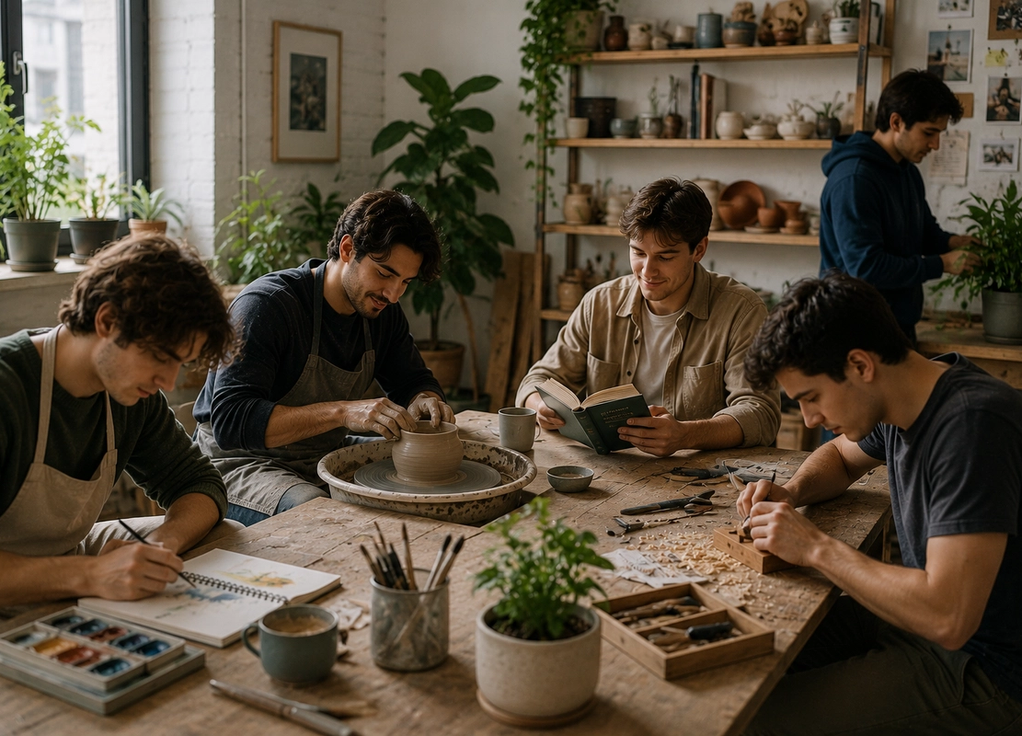
For a while, it seemed as though every hobby was becoming another form of content. Cooking became something to photograph, running came with statistics to share, reading became a yearly challenge, and even quiet activities like knitting or gardening could turn into carefully documented online identities. But something is shifting. More people are returning to hobbies that happen largely away from screens: pottery, painting, sewing, gardening, running clubs, book groups, baking, woodworking, photography, and countless other activities that require hands, attention, and time. Their appeal is not that they are new. It is precisely that they are not. In a culture built around speed, visibility, and constant digital stimulation, doing something slowly and imperfectly for no reason other than enjoyment is starting to feel surprisingly valuable.
We are tired of experiencing everything through screens
Screens now sit between us and an enormous percentage of everyday life. We work through them, communicate through them, shop through them, watch entertainment through them, follow the news through them, and sometimes relax by switching from one screen to another. Digital life offers extraordinary convenience, but it also means many hours of the day involve the same basic physical experience: sitting still and looking at a rectangle. Real-life hobbies break that pattern. Kneading dough, planting herbs, drawing, repairing something, playing an instrument, or throwing a ball requires a different kind of attention. Your hands are doing something, your environment matters, and the experience cannot be reduced entirely to scrolling or clicking. After a day spent online, that physicality can feel like relief.
People want to make things again
There is a particular satisfaction in producing something tangible. You can hold a scarf you knitted, eat the bread you baked, hang the photograph you printed, or watch something you planted begin to grow. The result does not need to be professional to feel meaningful. In fact, part of the appeal may be that it is not. Much of modern digital life presents us with polished outcomes: perfect interiors, professionally edited videos, restaurant-quality meals, and people who appear extraordinarily skilled at everything they attempt. A hobby gives you permission to be a beginner. The first ceramic bowl may be crooked. The first loaf may be dense. The first painting may never leave the drawer. Nothing terrible happens. You simply try again.
Hobbies give us somewhere to put our attention
Many forms of entertainment are designed to require very little from us. We can watch, scroll, and consume while our attention moves rapidly between things. Hobbies often demand the opposite. You need to follow the pattern, watch the pan, listen to the music, focus on the stitch, or pay attention to what your body is doing. This concentration can make time feel different. An hour spent scrolling can disappear without leaving much behind, while an hour spent painting or gardening often feels distinct and memorable. The mind has somewhere specific to be. You may still think about work, relationships, or tomorrow’s responsibilities, but the activity keeps pulling you back toward what is directly in front of you.
They create friendships without making friendship the assignment
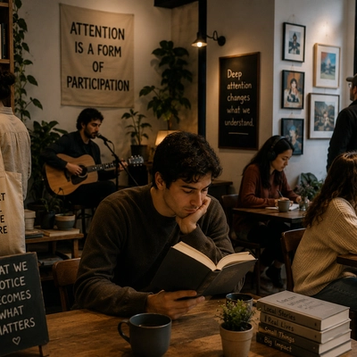
Adult friendship can become strangely formal. Everyone is busy, so seeing someone requires checking calendars, choosing a date, deciding where to meet, and scheduling another meeting weeks later. Shared hobbies create a reason to see people repeatedly without requiring friendship itself to carry the entire event. Running clubs, dance classes, book groups, community gardens, sports teams, craft workshops, and cooking classes bring the same people together around something else. Conversation happens naturally because there is already a shared activity. Over time, familiarity can become friendship. This is particularly valuable in a period when many social interactions happen digitally. Being physically present with the same group of people every Tuesday can create a sense of community that a group chat cannot fully reproduce.
Not everything needs to become productive
The modern instinct is to turn hobbies into improvement projects. Running needs a faster pace. Reading needs a target. Photography needs followers. Baking could become a side business. Once you become reasonably good at something, someone may suggest monetizing it. But a hobby does not need to generate money, status, content, or measurable progress to justify the time spent on it. You can play tennis badly for twenty years and still love playing tennis. You can paint without showing anyone the paintings. You can read without tracking the number of books. Protecting hobbies from productivity may actually be part of what makes them restorative. They provide a rare area of life where the outcome does not need to prove anything.
The best hobby may be the one you forget to document
There is nothing wrong with sharing the things you enjoy online. Communities built around hobbies can teach, inspire, and connect people who would otherwise never meet. But it is worth noticing what happens when you occasionally leave the experience undocumented. Cook something without photographing it. Take a walk without tracking it. Make something and let it exist only in your home. Read a book without posting a review. When nobody else needs to see the activity, your relationship with it can change. You become less aware of how it looks and more aware of how it feels.
The return of real-life hobbies is not a rejection of technology. It is a response to a life increasingly dominated by it. People still want to make things, move their bodies, learn slowly, meet in person, and become absorbed in activities that do not arrive through a feed. The most radical thing about a hobby may be how ordinary it is. You spend an hour doing something because you like doing it, nobody needs to know, and nothing about it has to become more than that.