The Digital Habits of People Who Seem Calm Online
Riley Reyna
August 28, 2026
Some people seem to have a completely different relationship with the internet. They answer messages without appearing permanently available, know what is happening without following every update, and use social media without seeming consumed by it. Their phones are still part of their lives, but not the center of them. This can look like unusual self-control, but it is often the result of small boundaries rather than extraordinary discipline. Calm digital habits are less about rejecting technology and more about deciding when, where, and why you use it. The internet becomes much easier to live with when everything is not allowed to compete for your attention at the same time.
They do not let every notification become an interruption
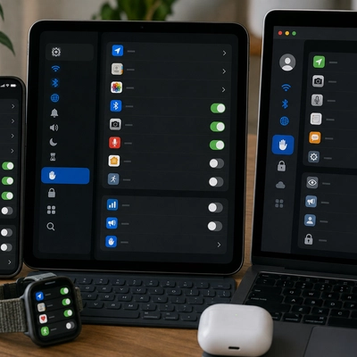
A phone that lights up every few minutes creates a sense that something is always happening. Most of those alerts are not urgent. They are likes, recommendations, promotions, news updates, group messages, reminders from apps, and notifications designed primarily to bring you back to a platform. People with calmer digital lives tend to be selective about what can interrupt them. They keep notifications for things that genuinely require timely attention and allow everything else to wait inside the app. This changes the relationship with the phone in a subtle but important way. Instead of responding whenever an app decides to ask for attention, you choose when to open it. Messages can still be answered, news can still be read, and nothing important needs to disappear. It simply stops arriving as a constant stream of tiny emergencies.
They check things instead of constantly monitoring them
There is a difference between checking email and keeping email open all day. The same is true of news, messages, social media, and work platforms. Constant monitoring fragments attention because part of your mind remains alert for the next update even while you are doing something else. Calmer users often create natural windows for checking things. They might answer messages after breakfast, look at email when they begin work, check again later in the afternoon, and leave less important communication until they have time for it. The schedule does not have to be strict. The important shift is understanding that being reachable does not require being continuously responsive. Most messages can wait longer than the notification makes them feel like they can.
They are selective about what they follow
Your feed is partly shaped by algorithms, but it is also shaped by hundreds of small decisions you have made over time. Every account you follow, newsletter you subscribe to, channel you join, and publication you regularly open adds another voice competing for attention. People who seem calm online tend to curate aggressively. They unfollow accounts that repeatedly make them irritated, anxious, or dissatisfied. They leave groups that create more noise than value. They unsubscribe from newsletters they never read and mute people they do not want to remove completely. This is not about creating a world where you never encounter disagreement or difficult information. It is about recognizing that there is no prize for voluntarily filling your daily environment with content you dislike.
They do not participate in every conversation
The internet creates endless opportunities to have an opinion publicly. There is always a debate happening, a bad take to correct, a comment that seems obviously wrong, or a stranger whose argument feels impossible to ignore. Responding can feel satisfying for a moment, but it can also keep you mentally attached to conversations long after you close the app. Calm online users become comfortable letting some things pass without their contribution. They understand that reading something does not create an obligation to respond to it. Before joining an argument, it helps to ask whether the conversation is likely to produce anything useful. Sometimes speaking up matters. Sometimes the healthiest option is simply continuing with your day.
They protect the offline parts of their lives
Not every experience needs to become content. You can eat a beautiful meal without photographing it, go somewhere interesting without posting your location, or spend an afternoon with friends without documenting the entire thing. People with healthier digital boundaries often keep some parts of their lives naturally private. This does not mean disappearing from social media or refusing to share anything personal. It means occasionally allowing an experience to exist without immediately thinking about how it will look to other people. The less every moment needs to be presented, the easier it becomes to pay attention to the moment itself. Privacy can also remove the subtle pressure to compare the response to an experience with the experience itself.
They know when the internet has stopped being useful
Perhaps the most important digital habit is recognizing when you have had enough. There is a point when reading another article will not make you better informed, scrolling another twenty minutes will not make you more entertained, and checking messages again will not make you more connected. Calm users learn to notice that point and leave. They put the phone down, close the laptop, go outside, make dinner, read, exercise, talk to someone, or simply allow the day to continue offline.
A calm digital life does not require perfect screen-time statistics or complete disconnection. It comes from refusing to give every platform equal access to your attention. Turn off what does not need to interrupt you, choose what deserves space in your feed, let some conversations happen without you, and protect parts of your life from becoming content. Technology becomes much less overwhelming when you remember that being online is somewhere you can go, not somewhere you have to remain.