
How to Take Better Photos with Just Your Phone
Dion Barajas
August 28, 2026
You do not need an expensive camera to take photographs that feel intentional. Modern phones are capable of producing remarkably good images, but the camera itself is only part of the equation. A better phone will not automatically fix awkward composition, bad light, a distracting background, or a photograph taken half a second too late. The biggest improvements usually come from learning to notice what is already in front of you: where the light is coming from, what belongs inside the frame, and what you actually want the photograph to say. Once you start paying attention to those things, even an ordinary phone camera becomes much more powerful.
Find better light before taking the photo
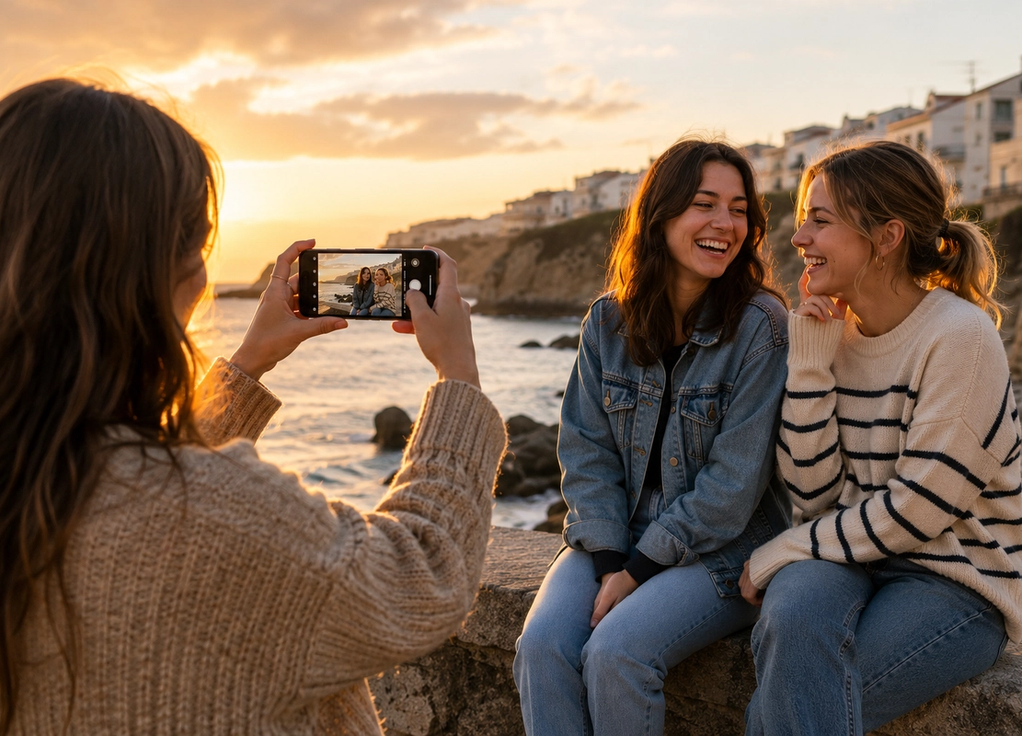
Light can change a photograph more dramatically than almost any camera setting. When possible, look for soft natural light rather than immediately relying on flash. Outdoors, early morning and the hours around sunset often create warmer, softer light than the middle of a bright day. Indoors, moving someone closer to a window can make a portrait look dramatically better without changing anything else. Pay attention to the direction of the light as well. Light coming from the side can create depth, while harsh overhead light can produce strong shadows around the eyes and face. Backlighting can create beautiful silhouettes or glowing edges, but your phone may need help exposing the subject correctly. Before taking the picture, move around. Sometimes taking three steps to the side produces a bigger improvement than changing any camera setting.
Clean the lens and stop automatically zooming
It sounds almost too obvious, but phone camera lenses spend their lives touching fingers, pockets, tables, and bags. A quick wipe with a clean, soft cloth can make an immediate difference, particularly when photos look hazy or lights appear surrounded by strange streaks. Once the lens is clean, avoid automatically pinching the screen to zoom. Digital zoom can reduce image quality because the phone may simply be enlarging part of the image rather than capturing additional detail. When possible, physically move closer to your subject or use one of your phone’s dedicated optical focal lengths. You will usually get a sharper result and may discover a stronger composition simply by changing where you are standing.
Pay attention to what is inside the frame
Good composition is often less about adding something and more about removing distractions. Before pressing the shutter, quickly scan the edges of the screen. Is there a trash bin behind the person? Is a lamp appearing to grow out of someone’s head? Is there an unnecessary object pulling attention away from the subject? Moving slightly left or right can clean up the background instantly. Turning on your phone’s grid can also help you keep horizons straight and experiment with the rule of thirds, where important subjects are placed away from the exact center of the frame. But do not treat composition rules as laws. Centered images can be beautiful, especially when the scene is symmetrical. The important thing is to make the placement feel deliberate rather than accidental.
Tap the screen and control the exposure
Phone cameras make many decisions automatically, but you do not have to accept every one of them. Tapping your subject usually tells the camera where you want it to focus and can also adjust exposure. On many phones, you can then slide the exposure brighter or darker before taking the photograph. This is particularly useful in difficult lighting, such as sunsets, bright windows, or scenes containing both deep shadows and bright highlights. Phones often try to make everything clearly visible, but a slightly darker photograph can sometimes preserve atmosphere and prevent bright areas from losing detail. Experiment instead of assuming the automatic exposure is correct. The screen gives you an immediate preview, so small adjustments cost nothing.
Take fewer posed photos and more moments
Some of the best phone photographs happen between the pictures people deliberately pose for. Keep the camera ready when someone is laughing after the formal group photo, when a child becomes distracted by something nearby, or when people are interacting rather than looking directly at the lens. Burst shooting or Live Photo-style features can help capture fast movement and expressions that disappear in a fraction of a second. When photographing people, give them something to do instead of simply telling them to stand still and smile. Ask them to walk, talk to each other, look somewhere, or continue whatever they were already doing. Photographs often feel more natural when the camera is observing a moment rather than interrupting it.
Edit lightly and keep what made the photo good
Editing can improve a photograph, but it can also quickly remove what made it feel real. Start with simple adjustments: crop distracting edges, straighten the horizon, correct exposure, and make small changes to shadows or highlights if necessary. Be careful with heavy filters, extreme saturation, excessive sharpening, and aggressive skin smoothing. A sunset does not need to become neon orange to look impressive, and a portrait does not need to remove every line or texture from someone’s face. The best edit is often the one that makes the photograph look closer to how the moment felt rather than announcing that it has been edited.
Taking better phone photos is ultimately about becoming more observant. Notice the light before opening the camera. Look at the background before focusing on the subject. Move closer, change your angle, wait another second, and take the photograph when something actually happens. Technical features can help, but attention matters more. The phone in your pocket is already capable of taking excellent photographs. The real upgrade is learning to see the picture before you press the button.