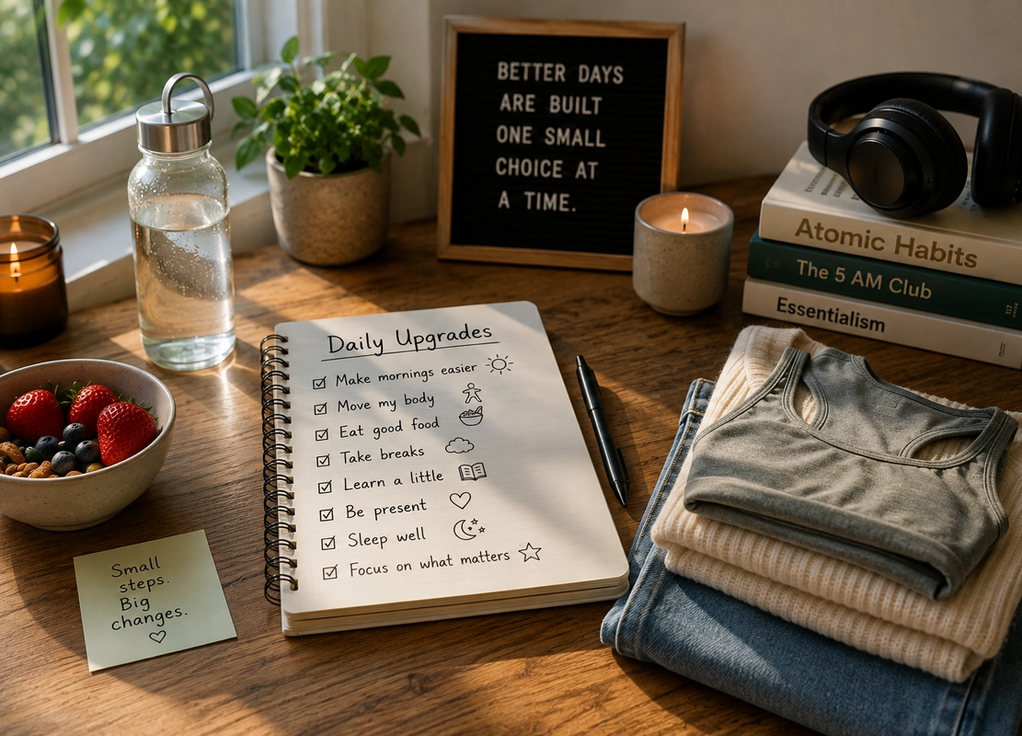
The Small Daily Upgrades That Add Up to a Better Life
Miriam Baker
August 27, 2026
A better life is often imagined as the result of a major change: a new job, a new city, a dramatic fitness transformation, a bigger home, or finally reaching some long-term goal. Those things can matter, but most of life is not made up of milestones. It is made up of ordinary Tuesdays, familiar routines, repeated conversations, meals, commutes, mornings, and evenings. That means small improvements to everyday life can have a surprisingly large effect over time. You do not need to redesign everything at once. Often, the most useful upgrades are the ones that make something you already do slightly easier, healthier, calmer, or more enjoyable.
Make the things you do every day easier
Start with repetition. Anything you do almost every day is a good candidate for improvement because even a tiny benefit gets multiplied hundreds of times. If you spend every morning searching for keys, give them a permanent place. If your phone charger is always in the wrong room, buy another one. If cooking feels difficult because the knife you use is terrible, sharpen or replace it. Keep the things you reach for most where they are easiest to access and remove unnecessary steps from recurring tasks. These changes can seem almost too small to matter, but friction accumulates. Five mildly irritating moments every morning can change the tone of the entire start to your day. A well-designed routine is often simply one where fewer things annoy you.
Protect the beginning and end of your day
You do not need an elaborate morning or nighttime routine, but the first and last parts of the day deserve some protection. Reaching for your phone immediately after waking can mean beginning the day with other people’s messages, news, requests, and opinions before you have even left bed. Try giving yourself a little time before opening everything to the outside world. At night, create a similar boundary. Lower the stimulation, prepare one or two things for tomorrow, and give yourself enough time to actually become tired before expecting to sleep. Even ten or fifteen calmer minutes at either end of the day can create a noticeable difference. The goal is not to optimize every second. It is to stop allowing your day to begin and end in reaction mode.
Upgrade what you use most, not what looks impressive
When people think about improving their lives, they often focus on purchases that feel exciting rather than the things they interact with constantly. A better mattress, comfortable shoes, a supportive desk chair, good kitchen equipment, or reliable headphones may improve hundreds of hours of your year. Something expensive that sits unused in a cupboard will not. This principle applies beyond purchases too. Put more effort into the meals you eat repeatedly rather than saving good food only for special occasions. Make the room where you spend most of your time pleasant before worrying about the one guests see. Buy clothes that work for your actual week rather than your imaginary one. Everyday quality is often more valuable than occasional luxury.
Create tiny systems for recurring problems
If the same problem keeps appearing, stop solving it from scratch. Build a system around it. Keep a running grocery list instead of trying to remember what you need at the store. Put appointments directly into your calendar when you make them. Keep a bag near the door for things that need to leave the house. Create automatic payments for predictable bills. Have a short list of meals you can cook when you cannot decide what to eat. Systems do not need to be elaborate productivity methods. Their purpose is simply to remove repeated decisions and prevent small responsibilities from taking up unnecessary mental space. The best systems eventually become almost invisible because they quietly handle things that used to require attention.
Give your attention somewhere to rest
A better life is not only about doing things more efficiently. It also requires moments when nothing is demanding your attention. Take a walk without checking your phone every few minutes. Eat one meal without a screen. Sit somewhere pleasant for ten minutes without trying to make the time productive. Read a few pages instead of automatically opening another app. Modern life makes it extremely easy to fill every pause with information, which means the mind rarely experiences genuine downtime. You do not have to disappear into the countryside or delete every social platform. Simply reclaim a few ordinary moments. Boredom, quiet, and undivided attention can feel unusual at first, but they often make days feel less fragmented.
Make good choices easier to repeat
Willpower is unreliable, especially when you are tired or busy. Instead of repeatedly trying to force yourself into better habits, arrange your environment so those habits require less effort. Put fruit where you can see it. Keep water nearby. Leave workout clothes ready if you want to exercise in the morning. Put the book you want to read beside the sofa and move distracting apps away from your phone’s home screen. Prepare tomorrow’s lunch while cleaning up dinner. None of these actions guarantees that you will make the better choice, but each one lowers the amount of effort required. Over time, that matters much more than occasional bursts of motivation.
The most meaningful upgrades rarely transform life overnight. They simply make tomorrow slightly better than today: five fewer minutes rushing, one less decision to make, a better night’s sleep, a meal you enjoy, a room that works properly, or a little more time spent paying attention. Individually, these changes can feel insignificant. Repeated for months and years, they become the texture of your life. And improving that texture may matter more than waiting for one dramatic change to improve everything at once.