How to Take Back Control of Your Phone (Without Quitting Tech)
Angela Fry
August 28, 2026
Your phone is probably one of the most useful things you own. It gives you directions, keeps you connected to people you love, stores your photos, handles payments, plays music, answers questions, manages appointments, and puts an enormous amount of information in your pocket. The problem is that the same device also contains an almost endless supply of reasons to keep looking at it. A quick check of one message can turn into twenty minutes of scrolling without any conscious decision to stay. Taking back control does not require deleting every app or replacing your smartphone with something from twenty years ago. It means changing the relationship so that you decide when the phone gets your attention instead of allowing the phone to decide for you.
Turn off notifications that do not deserve interruption
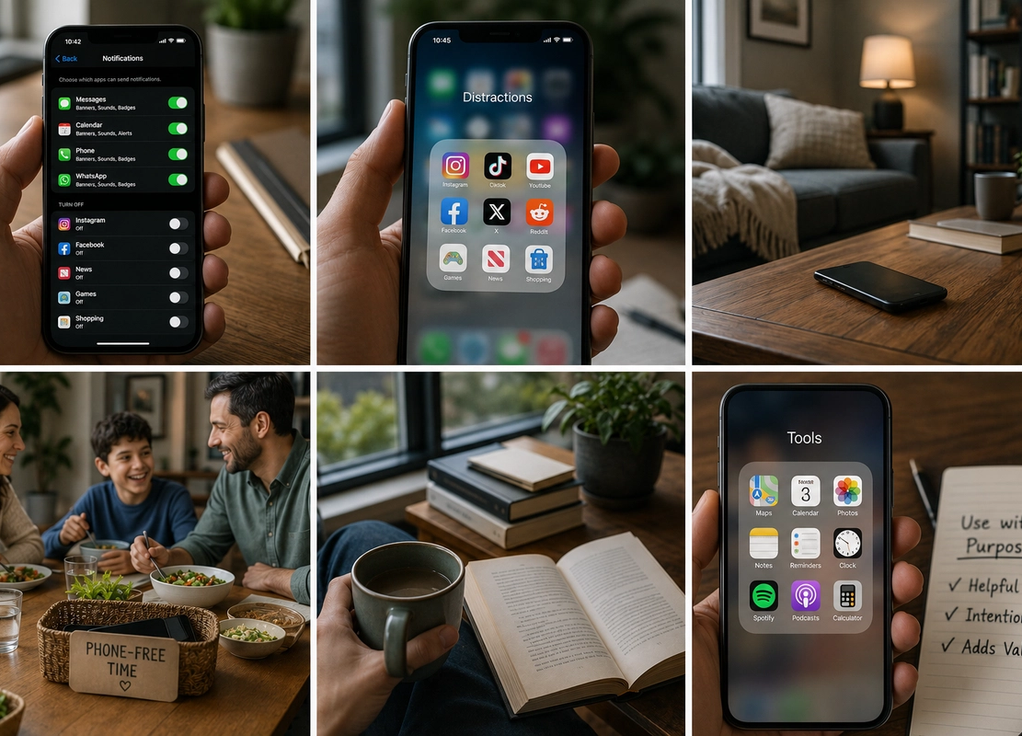
Notifications are one of the simplest places to start because they transform optional information into an immediate demand for attention. Most apps do not need permission to interrupt you. Shopping offers, social media likes, game updates, breaking-news alerts, recommended videos, and reminders that you have not opened an app recently can usually wait. Go through your notification settings and keep alerts only for things you genuinely want to know about in real time. Calls, important messages, calendar reminders, banking alerts, or certain work notifications may make the cut. Everything else can remain inside the app until you choose to open it. You do not lose access to the information. You simply stop allowing every service on your phone to choose when you see it.
Make distracting apps less convenient
The apps you open automatically should not occupy the easiest positions on your screen. Move social media, news, shopping, games, and other high-distraction apps away from the home screen. Put them in folders, move them several pages back, or remove their icons while keeping the apps installed. You can also log out of services you want to use less frequently or access them through a browser, where the experience is often slightly less frictionless. These tiny obstacles sound insignificant, but that is the point. Much of phone use is automatic rather than deliberate. If opening an app suddenly requires searching for it instead of tapping the same spot your thumb has memorized, you create a moment in which you can decide whether you actually want to continue.
Stop taking your phone everywhere
Phones have become so closely attached to us that leaving one in another room can feel strangely irresponsible. But you do not need your phone within arm’s reach every minute you are at home. Leave it on a table while eating dinner. Charge it outside the bedroom if you tend to scroll in bed. Go into the garden, take a shower, cook, or watch a film without keeping it beside you. If you are going for a short walk somewhere familiar and do not need to be reachable, consider leaving it behind occasionally. Physical distance is one of the easiest ways to reduce automatic checking because it removes the possibility entirely. You are not exercising extraordinary self-control. The device simply is not available every time your brain wants a quick burst of stimulation.
Give your phone specific times and places
Instead of trying to use your phone less all day, create a few boundaries that are easy to understand. Maybe the first thirty minutes after waking are phone-free. Perhaps phones stay away from the dinner table or out of the bedroom after a certain time. You might decide to check social media after lunch rather than whenever the impulse appears. Clear rules reduce repeated decision-making. You do not need to ask yourself fifty times a day whether you have been scrolling too much because certain moments already have an answer. Start with one boundary that would noticeably improve your day. Once that feels normal, add another if you need it.
Replace the habit instead of leaving a hole
One reason reducing phone use can feel surprisingly difficult is that the phone fills dozens of tiny gaps. You reach for it while waiting for coffee, sitting on the sofa, standing in line, or taking a break from work. Remove the phone without replacing the behavior and boredom arrives immediately. Give yourself alternatives. Keep a book somewhere easy to reach. Listen to music without simultaneously scrolling. Carry a notebook. Take a short walk. Make tea. Talk to whoever is in the room. Or simply allow yourself to be bored for a few minutes. Not every pause needs entertainment. Learning to tolerate small stretches without input is part of breaking the automatic relationship with the screen.
Keep the parts of technology that make life better
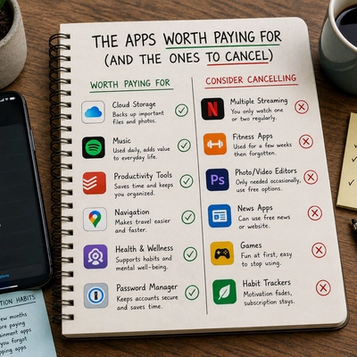
The goal is not to turn your smartphone into an expensive calculator. Keep using maps, messaging, music, photography, banking, calendars, podcasts, language tools, and whatever else genuinely improves your life. Even social media can remain if you enjoy it. The important distinction is between intentional and automatic use. Spending forty minutes watching videos because you deliberately wanted to relax is different from opening an app for one notification and emerging forty minutes later without remembering what you watched.
Taking back control of your phone does not require rejecting technology. It requires remembering that convenience and constant access are not the same thing. Turn off unnecessary interruptions, make distracting apps slightly harder to reach, create a few phone-free spaces, and occasionally leave the device in another room. Your phone should remain an extraordinary tool. It just does not need to be the place where every spare minute of your life automatically goes.