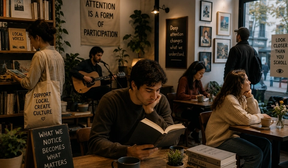

How to Read More Books This Year
Riley Reyna
August 28, 2026
Reading more books sounds like one of the simplest goals you can set. Buy a book, open it, and read. Yet months pass surprisingly quickly, and the stack beside the bed somehow grows faster than the number of books you finish. The problem is usually not that people have no time to read. It is that reading competes with activities designed to capture attention instantly. Ten minutes with a book requires a deliberate choice; ten minutes scrolling can happen without you noticing. If you want to read more this year, the answer is not necessarily ambitious reading targets or forcing yourself through serious books. It is making reading easier to begin, more enjoyable to continue, and a natural part of your existing day.
Make reading ridiculously convenient
If your book is on a shelf in another room while your phone is already in your hand, the phone will usually win. Put books where you naturally have small pockets of time. Keep one beside your bed, another near the sofa, or an ebook on a device you regularly carry. Take a book when you expect to wait somewhere, travel by train, or sit at an airport. The goal is to reduce the number of steps between wanting to read and actually reading. Digital books and audiobooks can make this even easier because they allow reading to fit into situations where a physical book may not. A commute, walk, household task, or long drive can become part of your reading time without requiring another free hour in the day.
Read a little every day
You do not need long, uninterrupted evenings to finish a surprising number of books. Twenty minutes of reading each day can add up to more than two hours every week. Ten pages a day becomes roughly 3,650 pages over a year, enough to finish several substantial books without ever having a marathon reading session. Choose a small target that feels easy enough to maintain: ten pages, fifteen minutes, or one chapter. The exact number matters less than creating regular contact with a book. Longer sessions will happen naturally when you have time or become absorbed in a story. The daily minimum exists for ordinary days when reading might otherwise disappear completely.
Attach reading to something you already do
New habits become easier when they have a predictable place in your routine. Read while drinking your morning coffee, for twenty minutes after lunch, on your commute, or before going to sleep. When reading is connected to something that already happens, you do not have to repeatedly search for time. You begin expecting the two activities to happen together. Evening reading can be particularly useful if it replaces some of the time normally spent scrolling or watching another episode of something. You do not have to eliminate those activities entirely. Even replacing fifteen minutes of screen time with a book gives you more than ninety hours of potential reading over the course of a year.
Stop finishing books you do not like
Few things destroy a reading habit faster than a book you dread opening. Many people treat abandoning a book as a failure, especially if they bought it or have already read a hundred pages. But continuing does not recover the time you have already spent; it simply adds more time to something you are not enjoying. Give yourself permission to stop. You can always return later if the timing was wrong. Reading more does not require finishing everything you begin. In fact, becoming comfortable with abandoning books can help you read significantly more because your limited reading time is spent on books that actually hold your attention. Life is too short, and the number of books available is far too large, to spend weeks proving that you can finish one you dislike.
Keep a list of what you want to read next
Finishing a good book can create momentum, but that momentum disappears quickly if you have no idea what to pick up afterward. Keep a short list of books that genuinely interest you. Add recommendations when you hear them rather than trying to remember later. It can help to include different types of books so you can choose according to your mood. You might want a long novel sometimes and a short essay collection at others. After something intellectually demanding, you may want a mystery, memoir, romance, or familiar favorite. There is no requirement to read the most impressive option available. A varied reading list keeps reading enjoyable rather than turning it into another self-improvement assignment.
Make your goal about reading, not numbers
Setting a goal of twenty, thirty, or fifty books can be motivating, but it can also change the way you choose what to read. Suddenly a 700-page novel feels inconvenient because you could finish three shorter books in the same time. You start paying attention to the number rather than the experience. Track books if you enjoy doing it, but do not let the target become more important than reading itself. One extraordinary book that takes a month can be worth far more than four forgettable ones you rushed through to stay on schedule.
If you want to read more this year, make books easier to reach and give them a regular place in your day. Read ten pages when you cannot manage fifty. Abandon books that make reading feel like homework and keep something exciting ready for when you finish. You do not need to become someone who reads for hours every evening. You simply need to become someone who opens a book often enough that, by the end of the year, all those small sessions have quietly turned into a shelf full of finished stories.