The Two-Minute Rule That Solves Procrastination
Angela Fry
August 28, 2026
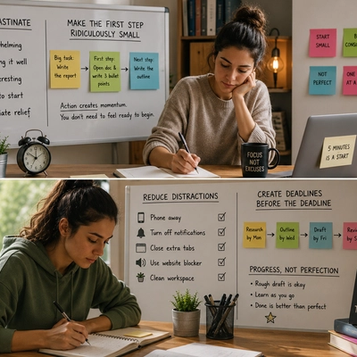
Procrastination rarely begins with a conscious decision to waste an afternoon. It usually starts with something much smaller. You see an email that needs a reply and decide to deal with it later. A plate needs washing, but you leave it in the sink. You need to begin a report, make an appointment, put something away, or send a document, but none of it feels urgent enough to do immediately. Individually, these tasks are tiny. Together, they create the uncomfortable feeling of having dozens of unfinished things following you around. The two-minute rule offers a simple way to interrupt that pattern: if something takes less than two minutes to complete, do it now. And if something is too large to finish quickly, make the first step small enough that you can begin it in roughly two minutes.
Finish tiny tasks before they become mental clutter
Some tasks take longer to remember than they do to complete. Putting a jacket away, adding something to your calendar, replying “yes” to a straightforward message, filing a document, or putting a cup in the dishwasher may require almost no effort. When you postpone these things, however, your brain has to keep encountering them. The cup is still there the next time you enter the kitchen. The unanswered message remains visible every time you open your phone. The appointment continues floating around in your head because you have not written it down. Completing tiny tasks immediately prevents them from accumulating into a larger collection of unfinished business. You are not trying to become productive every second of the day. You are simply recognizing when postponing something creates more work than doing it.
Use two minutes to start bigger tasks
The rule becomes even more useful when applied to things that obviously cannot be completed in two minutes. You cannot write a presentation, clean an entire apartment, exercise for an hour, or finish a complicated project that quickly. But you can begin. Open the document and write the heading. Put on your workout clothes. Take the vacuum cleaner out of the cupboard. Gather the paperwork you need. Read the first page. The goal is to reduce the psychological size of the task. “Finish the report” can feel intimidating because your mind immediately imagines hours of work. “Open the report and write one sentence” feels almost impossible to refuse. Once you are moving, continuing is often easier than beginning was.
Remove the expectation that you must finish
One reason people avoid starting is that starting feels like agreeing to complete the entire task. If you sit down to work, you imagine you must stay there for three hours. If you begin exercising, you think it only counts if you finish the planned workout. The two-minute rule gives you permission to separate starting from finishing. You can genuinely stop after two minutes if you want to. That matters because the first objective is not completing the project; it is overcoming the resistance to beginning. Frequently, you will continue because the hardest transition has already happened. But even when you do stop, you have made the next attempt easier. The document exists, the materials are ready, or the first step has been completed.
Know when not to use it
Not every two-minute task needs to be completed immediately. If you are concentrating on important work, interrupting yourself every time a small email arrives can destroy your focus. The rule works best when you encounter small tasks during natural transitions rather than allowing them to interrupt deep work. If you are already answering emails, deal with the quick replies instead of repeatedly reopening them. If you are cleaning the kitchen, put away the item you notice rather than creating a separate task for later. But if you are writing, studying, or working on something that requires sustained attention, capture the small task somewhere and return to it afterward. Productivity is not about responding immediately to everything that appears.
Combine the rule with your existing routines
The two-minute rule becomes easier to use when it is attached to moments that already happen every day. Before leaving a room, put one thing back where it belongs. After opening the mail, immediately discard what you do not need. When you make an appointment, put it directly into your calendar. After dinner, handle the few kitchen tasks that would otherwise be waiting tomorrow morning. These actions prevent small amounts of disorder from accumulating until they require a much larger cleanup. The same principle works digitally. File a document when you download it, unsubscribe from an email you never read, or save information where you will actually be able to find it later.
Let small actions create momentum
The real value of the two-minute rule is not the amount you can accomplish in 120 seconds. It is the way small actions change your relationship with starting. Procrastination thrives when tasks feel vague, large, or emotionally uncomfortable. Making the first action tiny removes some of that resistance. You do not need to feel motivated enough to clean the whole house. You only need enough motivation to put away five things. You do not need to feel ready to write the whole article. You only need to open the document and begin the first paragraph.
The rule will not magically eliminate every form of procrastination, and complicated work still requires time, concentration, and effort. But it solves one surprisingly common problem: allowing the difficulty of finishing something to prevent you from starting it. Do the tiny tasks before they grow, and shrink the first step of larger tasks until beginning feels almost effortless. Two minutes may not finish the work, but very often, it is enough to get you moving.