How to Find the Best Local Food Anywhere You Go
Angela Fry
August 27, 2026
Food can tell you more about a place than almost any attraction. The dishes people grow up eating, the ingredients that appear in local markets, the bakeries crowded before work, and the restaurants families return to for years all reveal something about everyday life. Yet finding genuinely good local food while traveling can be surprisingly difficult. Search for restaurants in a popular destination and you are often shown the same highly reviewed places clustered around major attractions. Some may be excellent, but the best meals are not always the ones with the strongest online presence. Finding them usually requires looking beyond rankings and paying attention to how people actually eat.
Research dishes before restaurants
Before searching for where to eat, find out what you should be eating. Every destination has dishes, ingredients, drinks, breads, pastries, or cooking styles that are particularly connected to the region. Knowing a few of them gives you something specific to look for once you arrive. Instead of searching for “best restaurant in Naples,” for example, you can search for particular Neapolitan dishes or the places known for making them well. Regional differences matter too. A dish associated with an entire country may be much more common in one part of it than another, while something you have never heard of may be a local specialty. Learning even a little about the food beforehand makes menus easier to understand and helps you recognize restaurants that are actually serving local cooking rather than a generic version designed mainly for visitors.
Look a few streets beyond the main attractions
Location can tell you a surprising amount about a restaurant. Places directly beside major landmarks often depend on a constant flow of visitors, which means they do not necessarily need repeat customers. Walk five or ten minutes away from the busiest streets and the situation can change quickly. Look for restaurants on residential streets, around local markets, near offices, or in neighborhoods where people actually live. This does not mean every restaurant outside the tourist center will automatically be excellent, or that every centrally located restaurant should be avoided. Instead, pay attention to who is eating there. A dining room filled with local families, workers having lunch, or groups of friends can be a useful sign, especially if people appear to be ordering the same few dishes. A line can be meaningful too, although a line made entirely of tourists following the same viral recommendation tells you something different.
Ask people what they actually eat
One of the easiest ways to find good food is still one of the oldest: ask someone. Hotel staff, taxi drivers, shop owners, tour guides, bartenders, and people you meet during the trip can all be useful sources, but the way you ask matters. “What’s the best restaurant?” often produces the place they think visitors will like. Try asking where they personally go for lunch, where they would take a friend visiting from another city, or where they get a particular local dish. Specific questions usually lead to better answers. If several unrelated people mention the same restaurant, bakery, market stall, or neighborhood, pay attention. Recommendations become particularly useful when they come from people whose tastes you have already seen. If a coffee shop serves an excellent breakfast, asking the person behind the counter where they would go for dinner might lead somewhere interesting.
Use reviews as clues, not instructions
Online reviews are useful, but rankings should be a starting point rather than the final decision. A restaurant with thousands of reviews may simply be located in an area with enormous tourist traffic, while a neighborhood restaurant loved by regulars might have far fewer. Read what people actually say instead of looking only at the score. Repeated mentions of specific dishes, long-term consistency, friendly owners, or locals returning regularly can tell you more than a decimal rating. Photos are useful as well, especially pictures uploaded by customers rather than carefully styled promotional images. Social media can uncover interesting places, but viral restaurants deserve the same scrutiny. A beautiful plate or dramatic interior can make excellent content without necessarily producing an excellent meal. Use digital tools to gather possibilities, then combine that information with what you notice once you are actually there.
Visit markets, bakeries, and small food shops
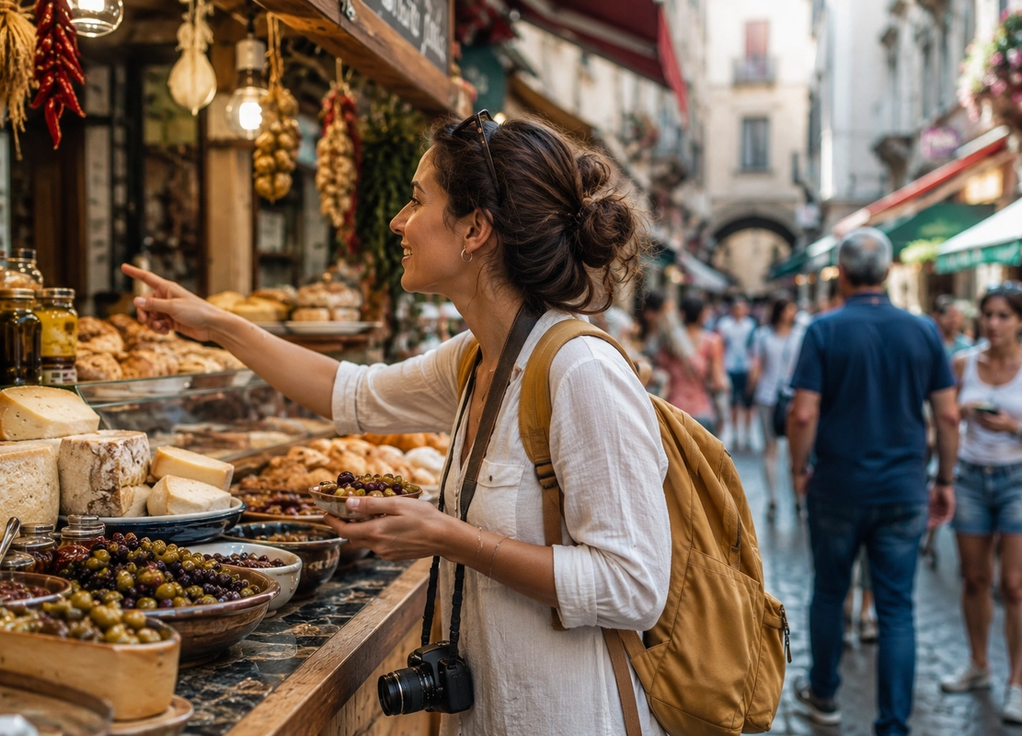
Some of the best local food experiences never involve sitting down in a restaurant. Markets can introduce you to regional fruit, cheese, bread, spices, seafood, cured meats, and prepared dishes that rarely appear on tourist menus. Bakeries reveal what people eat for breakfast or pick up on their way home. Small delis, food counters, street stalls, and family-run shops often specialize in one thing they have been making for years. These places are especially useful when you do not recognize local dishes because you can often see the food before ordering. They also make it easier to try several things without committing to a full restaurant meal. If something looks unfamiliar, ask what it is or how people normally eat it. Food becomes much more interesting when it turns into a way of learning about the destination rather than simply deciding where to have dinner.
Follow curiosity instead of chasing the perfect meal
Trying to find the absolute “best” restaurant everywhere can become another form of travel planning that leaves no room for discovery. Some memorable meals will come from careful research, while others will happen because you smelled something good while walking down a street. Leave space for both. Try the famous restaurant if you are excited about it, but also walk into the busy little place you know nothing about. Order something you have never tried. Return to a bakery you loved instead of forcing yourself to find somewhere new every morning. The goal is not to collect a list of prestigious restaurants. It is to understand a destination through the food people actually cook, buy, share, and return to. Often, the meal you remember years later is not the one that appeared at the top of a search result. It is the one you almost walked past.