How to Build a Pantry That Actually Cooks for You
Maxine Duran
August 27, 2026
A well-stocked pantry is not one with twenty kinds of flour, specialty spices you used once, and shelves so full that you cannot remember what is hiding at the back. A useful pantry is almost the opposite. It contains a relatively small collection of ingredients that can repeatedly turn whatever you have in the fridge into an actual meal. When the right basics are always available, cooking becomes less about planning every dish in advance and more about combining what you already have. The goal is not to prepare for every possible recipe. It is to make sure that on a tired Wednesday evening, there is almost always something you can cook.
Start with the carbohydrates you actually eat
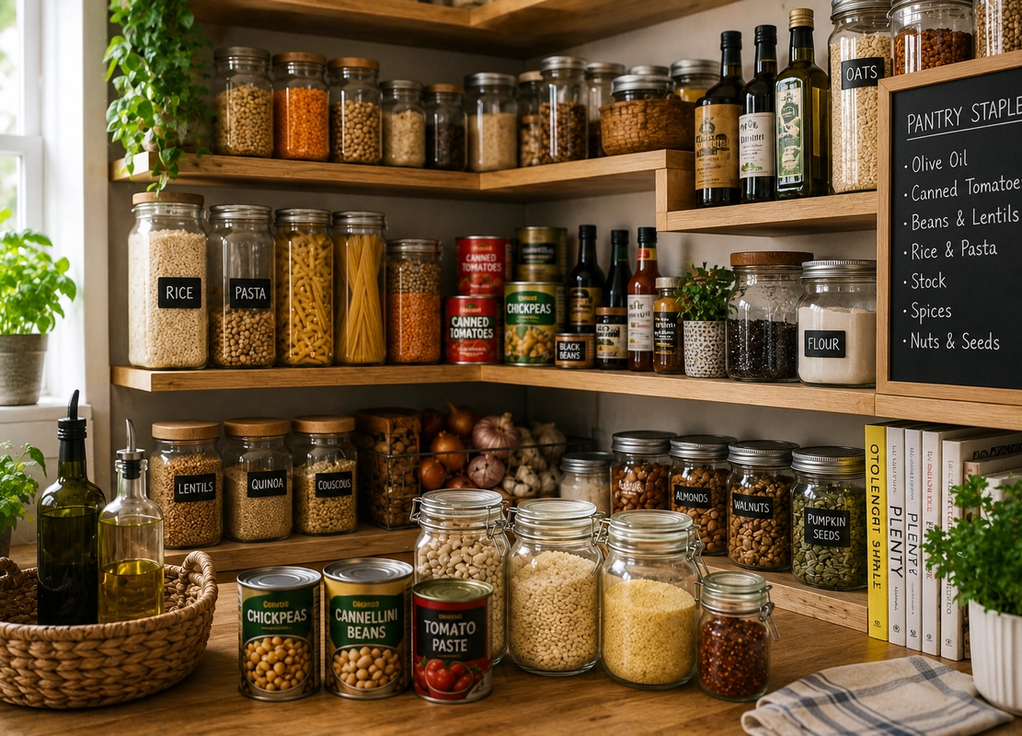
Rice, pasta, noodles, couscous, oats, potatoes, tortillas, and grains can all form the base of quick meals, but there is no reason to stock every option. Choose the ones you genuinely eat regularly. If pasta appears on your table twice a week, keep several packages. If you rarely cook rice, one bag is enough. These staples work because they can take completely different directions depending on what you add to them. Pasta can become a simple tomato sauce, a vegetable dish, or something built around garlic and olive oil. Rice can accompany a curry, become fried rice with leftovers, or form the base of a bowl with vegetables and protein. Keeping two or three dependable bases available means you are rarely starting dinner from nothing.
Keep ingredients that create flavor quickly
The difference between having ingredients and having a meal often comes down to flavor. Olive oil, vinegar, soy sauce, mustard, tomato paste, canned tomatoes, stock, garlic, onions, and a few sauces you use frequently can transform basic ingredients with very little effort. The same applies to spices, but avoid buying an enormous collection simply because a complete spice drawer looks appealing. Start with the flavors that appear repeatedly in the food you like to cook. Black pepper, paprika, cumin, chili flakes, oregano, cinnamon, or curry powder might make sense for one household, while another will use an entirely different combination. Your pantry should reflect how you actually eat. A small collection used constantly is much more valuable than dozens of jars slowly losing their flavor at the back of a cabinet.
Stock proteins that can wait for you
Fresh meat and fish require planning because they have a limited window before they need to be cooked or frozen. Pantry proteins give you more flexibility. Canned beans, chickpeas, lentils, tuna, and other shelf-stable options can become meals with very little preparation. Dried lentils are particularly useful because many varieties cook relatively quickly and work in soups, curries, salads, and simple one-pot dishes. Nuts, seeds, and nut butters can add substance to breakfasts, snacks, sauces, and bowls. Eggs are not technically a pantry ingredient in many countries, but they serve the same purpose: they last long enough to keep around and can turn leftovers into a meal in minutes. Having even two or three dependable protein options means an almost-empty refrigerator does not automatically require takeaway.
Build around ingredients that work in multiple meals
The most valuable pantry ingredients are not necessarily the most exciting ones. They are the ingredients that keep appearing in different combinations. Canned tomatoes can become pasta sauce, soup, shakshuka, curry, or the base of a stew. Chickpeas can go into salads, soups, curries, bowls, or hummus. Oats can become breakfast, granola, pancakes, or an ingredient in baking. Peanut butter can go on toast, into porridge, smoothies, dressings, or sauces. Before buying something new for the pantry, ask how many different ways you can realistically imagine using it. Specialty ingredients are worth having when you genuinely love a particular dish, but a pantry becomes much more useful when most items can move easily between different meals.
Create a few emergency meals
A good pantry should contain at least a few meals that require almost no thought. These are not elaborate recipes. They are combinations you know you can make when you are tired, busy, or overdue for grocery shopping. Pasta with canned tomatoes, garlic, and olive oil might be one. Rice with beans, spices, and whatever vegetables remain in the fridge could be another. Lentil soup, tuna pasta, noodles with peanut sauce, or chickpeas with tomatoes and spices can all fill the same role. Decide on three to five meals your household genuinely likes and make sure their essential ingredients are usually available. Once those combinations become familiar, you stop looking into a half-empty kitchen and thinking there is nothing to eat.
Organize the pantry so you can see what you have
Even the best ingredients are useless when you forget they exist. Keep similar items together and make frequently used ingredients easy to reach. You do not need matching containers or a perfectly styled pantry. Visibility matters much more than appearance. Put newer packages behind older ones so you naturally use what needs to be finished first, and occasionally check expiration dates before shopping. It can also help to keep a short list of staples you replace automatically when they run low. The goal is to create a pantry that supports the way you cook rather than becoming another area of the kitchen that needs constant management.
A pantry that actually works for you is not defined by how much food it contains. It is defined by how many meals you can create from it without making a special trip to the store. Stock the ingredients you repeatedly use, keep a few dependable meal combinations in mind, and leave enough space to see what is already there. When the basics are right, dinner stops requiring a perfectly planned refrigerator. Sometimes all you need is a bag of pasta, a can of tomatoes, a little garlic, and the knowledge that you already have everything required to make something good.