The 5 Cooking Skills Everyone Should Know
Dion Barajas
August 27, 2026
You do not need to know how to make complicated sauces, bake perfect bread, or recreate restaurant dishes to be a good cook. Most everyday cooking depends on a surprisingly small number of skills. Once you understand how to use a knife, control heat, season properly, cook a few basic ingredients, and adjust food as you go, recipes become much easier to follow. More importantly, you become less dependent on recipes altogether. You can open the fridge, see what is available, and have some idea of how to turn it into dinner. These five skills are not particularly impressive on their own, but together they make almost everything else in the kitchen easier.
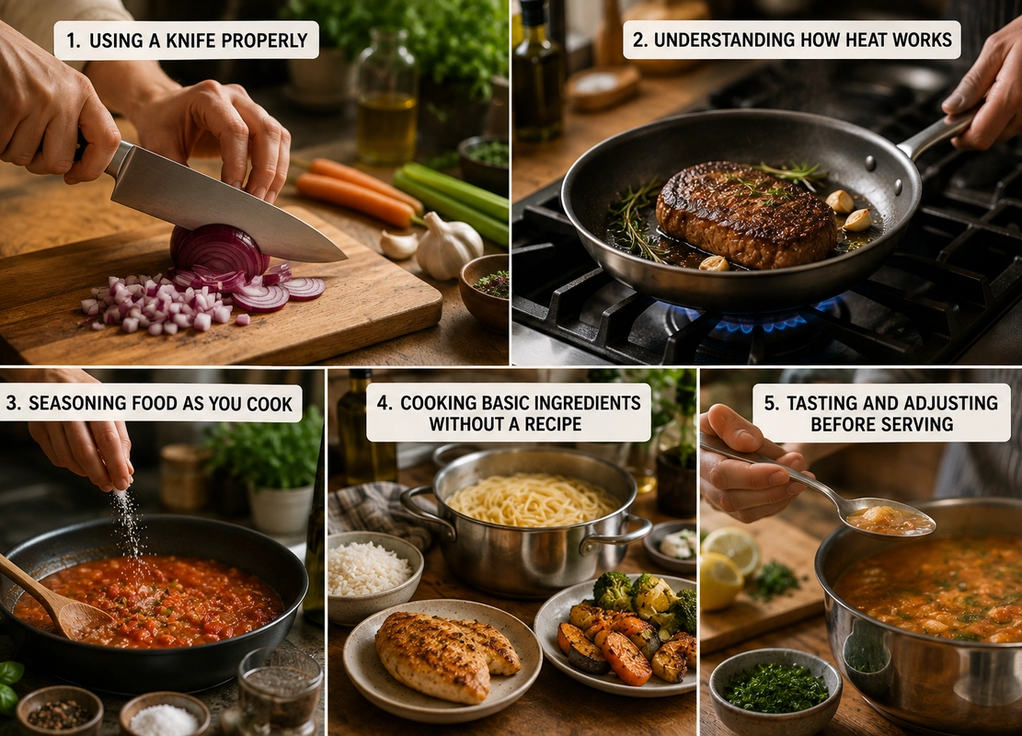
1. Using a knife properly
Good knife skills are less about chopping quickly and more about chopping safely and consistently. Start by learning how to hold a chef’s knife comfortably and keep the fingers of your other hand tucked away from the blade while cutting. Then practice a few basic cuts with ingredients you use regularly, such as onions, carrots, potatoes, peppers, and herbs. Try to make pieces roughly the same size, particularly when they will be cooked together. Uniform pieces cook at similar speeds, which means you are less likely to end up with some vegetables still hard while others are falling apart. A sharp knife also makes a significant difference. Despite seeming more dangerous, a properly sharpened knife is generally easier to control because you do not need to force it through ingredients. You do not need professional speed. If you can comfortably chop an onion, slice vegetables, mince garlic, and prepare ingredients without struggling, you already have one of the most useful cooking skills.
2. Understanding how heat works
Many disappointing meals come from using the wrong amount of heat rather than the wrong ingredients. High, medium, and low heat serve different purposes. High heat can create browning and crisp edges, while lower heat gives ingredients time to cook gently without burning. Learning when to use each one changes everything from scrambled eggs to steak. One common mistake is moving food constantly. If you want mushrooms, vegetables, or meat to develop a browned surface, they usually need some uninterrupted contact with a hot pan. Another mistake is overcrowding the pan. When too much food is added at once, moisture can become trapped and ingredients may steam rather than brown. Pay attention to what you hear and see. Aggressive smoking usually means the pan is too hot, while food sitting in oil without much sound may need more heat. Temperature settings vary between stoves, so learning to read the pan is more useful than memorizing a particular number on the dial.
3. Seasoning food as you cook
Seasoning is one of the clearest differences between food that simply tastes fine and food you actually want another serving of. Salt is the foundation, but good seasoning involves more than adding a large amount at the end. Season gradually throughout the cooking process and taste whenever it is safe to do so. This allows flavors to develop together and makes it easier to correct the dish before serving. It is also useful to understand balance. If something tastes heavy or flat, it may need acidity from lemon juice or vinegar rather than more salt. If a tomato sauce tastes too sharp, a little sweetness or additional cooking time may help. Fresh herbs can add brightness, spices can add warmth and complexity, and fats such as butter or olive oil can carry flavor and improve texture. Instead of asking only whether a dish needs salt, start asking what is missing. Developing that instinct is one of the biggest steps toward becoming a confident cook.
4. Cooking basic ingredients without a recipe
Everyone should have a few everyday foods they can cook without searching for instructions each time. Eggs are a good place to start because they teach temperature control and timing. Learn how to scramble, fry, and boil them the way you like. Then become comfortable cooking a few basic carbohydrates such as rice, pasta, and potatoes. Add several vegetables you enjoy and one or two proteins you eat regularly. You do not need dozens of techniques. Knowing how to roast vegetables, cook pasta properly, prepare rice, and pan-cook or roast a basic protein gives you the foundation for countless meals. Once these individual components become familiar, you can combine them in different ways. Rice, roasted vegetables, and chicken can become a bowl one night, while leftover vegetables might go into an omelet the next morning. Cooking becomes much less intimidating when basic ingredients stop requiring constant instructions.
5. Tasting and adjusting before serving
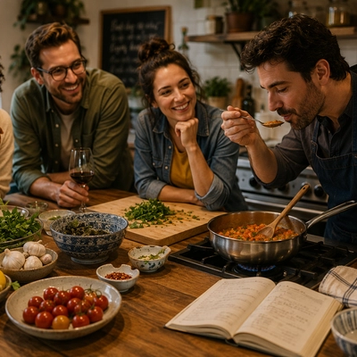
Perhaps the most useful cooking skill is also the simplest: taste your food before you serve it. Recipes can provide quantities and cooking times, but they cannot account perfectly for your ingredients, stove, cookware, or preferences. Tomatoes vary in sweetness, lemons vary in acidity, and different brands of stock or cheese contain different amounts of salt. That means the final stage of cooking should almost always involve tasting and adjusting. Ask yourself a few basic questions. Does it need more salt? Does it feel too rich? Would acidity make it brighter? Does it need more time to reduce or soften? Is the texture right? Make small changes and taste again. This habit teaches you more about cooking than blindly following instructions ever will. Eventually, you begin recognizing problems before they happen and understanding how to fix dishes that are not quite right.
Knowing these five skills will not turn anyone into a professional chef overnight, but that is not really the point. Everyday cooking is mostly about confidence: knowing how to prepare ingredients, control the pan, build flavor, cook a handful of staples, and make adjustments when something tastes wrong. Once those basics become automatic, recipes stop feeling like strict instructions and start feeling more like suggestions. And that is usually the moment when cooking becomes much more enjoyable.