How to Plan Meals Without Hating Sundays
Angela Fry
August 27, 2026
Meal planning is supposed to make the week easier, yet somehow it can turn Sunday into an unpaid shift in your own kitchen. You search for recipes, write a grocery list, shop for ingredients, wash produce, chop vegetables, cook several meals, portion everything into containers, and clean the kitchen afterward. By the time you are finished, half the day is gone and the thought of eating the same prepared lunch on Thursday already feels depressing. The problem is not meal planning itself. It is the idea that planning meals means preparing an entire week of food in one afternoon. A useful system should reduce the amount of time you spend thinking about food, not move all of that work to Sunday.
Plan fewer meals than you think you need
One of the easiest meal-planning mistakes is assigning a different dinner to every night of the week. Real life rarely follows the schedule that neatly. Someone works late, leftovers need to be eaten, plans change, or by Wednesday you simply do not want the meal you chose on Sunday. Instead of planning seven dinners, start with three or four. Leave room for leftovers, something from the freezer, a quick pantry meal, dinner out, or an evening when everyone wants something simple. The same applies to breakfast and lunch. You probably do not need seven completely different options. Choose a few things you enjoy and rotate them. Planning less may sound like being less organized, but it actually makes the system more realistic. A meal plan should provide direction without becoming another schedule you feel obligated to follow.
Build meals around ingredients, not complicated recipes
A week becomes much easier when several meals share ingredients. Instead of choosing five unrelated recipes with five separate shopping lists, think about components you can use in different ways. Roasted vegetables might accompany chicken one evening and become part of a grain bowl the next day. Rice can be served with a curry and later turned into fried rice. A batch of tomato sauce can work with pasta, meatballs, or baked vegetables. Even something as simple as washing lettuce or chopping a few vegetables can make several future meals faster. This approach also reduces food waste because ingredients are purchased with more than one purpose in mind. You still get variety, but you are not starting completely from scratch every night.
Prep ingredients instead of entire meals
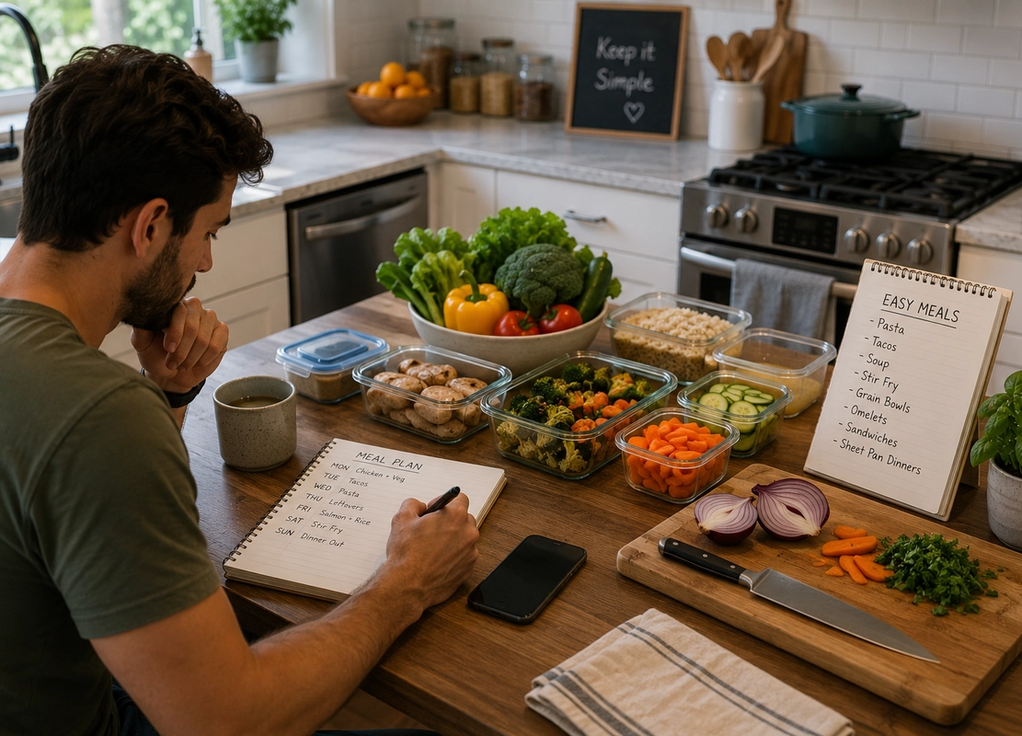
You do not have to spend Sunday cooking five complete dishes. Often, preparing a few ingredients gives you most of the benefit without the hours of work. Wash and chop vegetables, make a dressing, cook a pot of rice or another grain, marinate a protein, or prepare one sauce that can be used throughout the week. Then stop. When dinner comes around, much of the annoying preparation is already finished, but the food can still be cooked fresh. This also gives you flexibility. A tray of chopped vegetables can become a stir-fry, soup, pasta sauce, or roasted side depending on what you feel like eating that day. Fully prepared meals offer convenience, but prepared components offer convenience without forcing you to decide on Sunday exactly what you will want for dinner on Thursday.
Keep a list of meals that require almost no thought
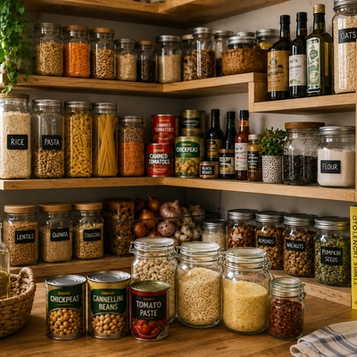
Not every dinner needs to come from a new recipe. Create a personal collection of ten or fifteen meals you can make without much planning and keep returning to them. Pasta with tomato sauce, omelets, tacos, soup, roasted chicken and vegetables, fried rice, grain bowls, sandwiches, or whatever your household genuinely enjoys can all become dependable options. Keep the basic ingredients for several of these meals in the pantry, freezer, or refrigerator. This removes one of the most exhausting parts of meal planning: constantly deciding what to cook. You can still try new recipes when you have the time and enthusiasm, but they become an addition rather than the foundation of every week’s menu. Familiar meals are not boring when you actually like eating them.
Make grocery shopping part of the system
Meal planning works best when your grocery list is easy to create. Keep a running list during the week and add staples as soon as they start running low instead of trying to remember everything on Sunday morning. Before shopping, quickly check the refrigerator, freezer, and pantry. Build at least one meal around something that needs to be used soon. Organize your list roughly according to how you move through the store so you are not repeatedly walking from one end to the other. You can also keep a basic list of items you buy almost every week, such as eggs, yogurt, fruit, vegetables, bread, milk, or whatever regularly appears in your household. The less mental effort grocery shopping requires, the less meal planning feels like a weekly project.
Give yourself permission to abandon the plan
A meal plan is useful only while it is making your life easier. If Thursday arrives and you do not want the dinner you planned, cook something else. Move that meal to Friday, freeze the ingredients, make eggs on toast, or order dinner if that is what the evening requires. Flexibility is not failure; it is what makes a system sustainable. Some weeks you may prepare several things ahead. Other weeks, your entire plan might consist of three dinners and a well-stocked freezer. The goal is not to prove how organized you are. It is to avoid standing in front of the refrigerator every evening wondering what to make.
A good meal-planning routine should give you back time, not consume your weekend. Plan fewer meals, reuse ingredients, prepare only what genuinely saves time, and keep easy options available for unpredictable days. Sunday does not need to become the day you cook the entire week. Sometimes twenty minutes with a grocery list and a loose plan is enough to make Monday through Friday significantly easier.