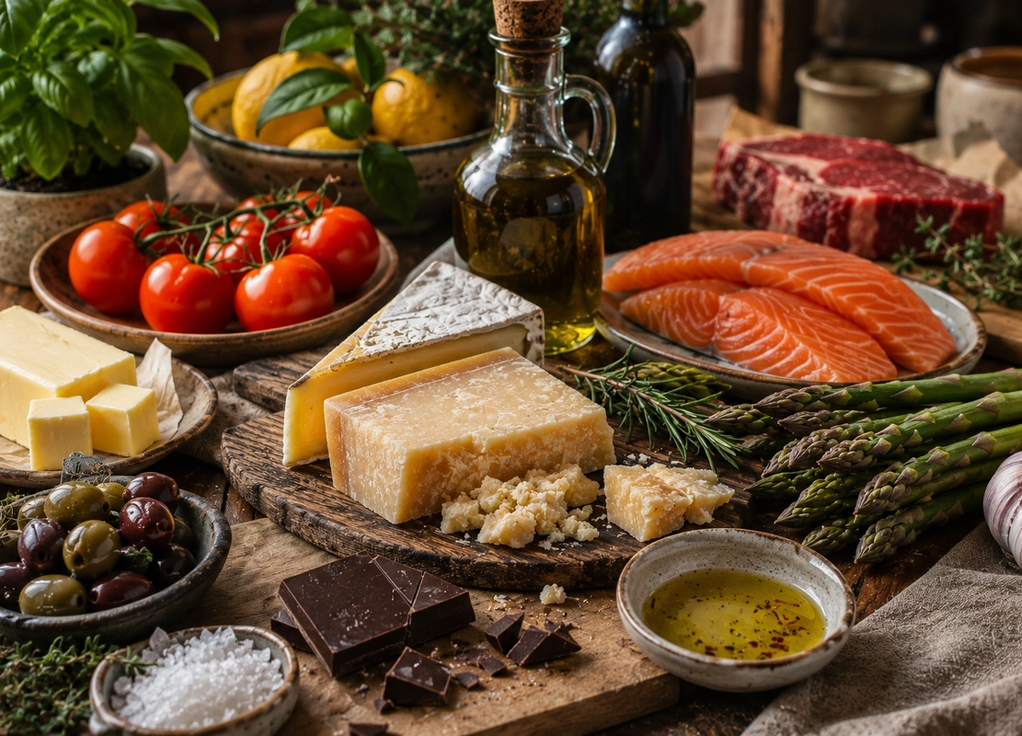
The Ingredients Worth Spending Real Money On
Riley Reyna
August 27, 2026
Not every ingredient deserves the premium version. Expensive salt will not rescue an underseasoned dinner, and the fanciest flour on the shelf probably will not transform an ordinary batch of pancakes. But there are certain ingredients where spending a little more can make a noticeable difference, particularly when the ingredient is eaten with very little preparation. The trick is knowing where quality actually shows up on the plate. Instead of buying the most expensive version of everything, spend more selectively on ingredients where flavor, freshness, texture, or production genuinely changes the experience.
Olive oil you can actually taste
There is little reason to pour your most expensive olive oil into a pan for every cooking task, but good extra-virgin olive oil is worth having for dishes where you will actually taste it. Use it to finish soups, dress salads, drizzle over tomatoes, serve with bread, or add to vegetables after cooking. Better olive oils can bring peppery, grassy, fruity, or slightly bitter flavors that become part of the dish rather than simply providing fat. It can make something as basic as good bread and tomatoes feel complete. Keep a more affordable oil for everyday cooking if you use large quantities, and reserve the bottle you really love for finishing. You do not necessarily need the most expensive one available. Freshness, proper storage, and choosing an oil whose flavor you enjoy matter more than buying a prestigious label.
Cheese that is meant to taste like something
Cheese is another ingredient where a small amount of something excellent can often do more than a large amount of something mediocre. A properly aged Parmesan-style cheese, flavorful feta, mature cheddar, or good mozzarella can completely change a simple dish. This is particularly true when cheese is one of the main flavors rather than something melted invisibly into a recipe. Good cheese tends to have enough character that you need less of it, which can make the higher price easier to justify. Buy smaller amounts and use them deliberately. Grate a flavorful hard cheese over pasta, add a few pieces of excellent cheese to a salad, or serve it simply with bread and fruit. When cheese is supposed to be noticed, quality is usually worth paying for.
Butter when butter is the point
If butter is disappearing into a large cake containing many other strong flavors, the difference between standard and premium butter may not be dramatic. But when butter is central to the experience, better quality becomes much easier to notice. Think of butter spread over warm bread, melted onto vegetables, used in a simple butter sauce, or featured heavily in pastries and shortbread. Good butter can have a richer flavor and more satisfying texture, making very simple food taste surprisingly luxurious. This is one of the useful rules for deciding where to spend more generally: the fewer ingredients a dish contains, the more noticeable the quality of each one becomes.
Chocolate for desserts where chocolate leads
Cheap chocolate can work perfectly well in recipes where it plays a supporting role, but if you are making chocolate mousse, brownies, ganache, truffles, or another dessert where chocolate provides most of the flavor, buy something you would happily eat on its own. Better chocolate can offer more depth and complexity instead of tasting primarily sweet. Pay attention to cocoa percentage, but do not assume that a higher number automatically means better chocolate. Choose the level of bitterness and sweetness that suits the dessert you are making. The same principle applies to cocoa powder. When chocolate is the main attraction, improving the chocolate is often more effective than adding extra ingredients to make the dessert feel sophisticated.
Fresh produce when seasonality matters
Expensive produce is not automatically better produce. A perfectly ripe tomato from a market may cost less than a beautiful imported one from an upscale grocery store and taste dramatically better. What is worth paying for is freshness and quality, especially when fruits and vegetables are being served raw or very simply. Tomatoes, berries, peaches, cherries, mushrooms, asparagus, and other highly seasonal ingredients can be extraordinary at their best and disappointing when purchased at the wrong time. Rather than always buying premium produce, spend according to the season. When strawberries are excellent, buy them and eat them simply. When tomatoes are at their peak, they may need little more than salt and olive oil. Good produce reduces the amount of work required in the kitchen because the ingredient already brings most of the flavor.
Meat and seafood when they are the center of the meal
When a steak, piece of fish, roast chicken, or seafood dish is the centerpiece of dinner, quality matters. This does not mean buying the most expensive cut available. In fact, cheaper cuts can be exceptional when cooked appropriately. Spend money on freshness, sourcing, and the qualities that actually affect the final dish rather than assuming price alone guarantees a better result. A good butcher or fishmonger can also help you choose an option that fits both your recipe and budget. One excellent piece of fish prepared simply can be far more satisfying than a more elaborate meal built around something mediocre. If the protein is going into a heavily seasoned stew or slow-cooked dish, however, you may have much more flexibility.
Spend where you can taste the difference
The best grocery budget is not one where every ingredient is premium. It is one where you know which ingredients deserve attention. Spend more on the olive oil you drizzle over finished dishes and less on the oil used for ordinary cooking. Buy excellent chocolate when making chocolate mousse but do not feel obligated to use it in every cookie. Choose seasonal produce rather than automatically choosing the most expensive produce. And whenever you are unsure, consider how prominently the ingredient appears in the final dish.
Cooking well is rarely about having the most expensive kitchen or grocery basket. It is about knowing where quality matters. When an ingredient is simple, exposed, and central to the dish, that is usually where spending a little more pays you back with every bite.